B: What are the Benefits?
What are the benefits of this? Are these benefits your personal opinion or based on a policy? Can you share any good-quality, evidence-based information around this with me based on my personal situation?
8 September 2026
Lessons Learnt from a Doula Who Lives and Breathes Birth
“Childbirth is not a problem to solve. It is a process to understand. I think we are entering an era where respect for women, babies, childbirth and optimal health can be restored. Finally.”
As you may have already gathered, I have been immersed in the world of birth for several years now. In that time, I have sat with hundreds of families across some of the most profound, vulnerable and powerful moments of their lives. I have held space in hospital rooms and living rooms, through calm waters and stormy ones, through births that unfolded exactly as hoped and births that took unexpected turns.
And across all of it, the same themes come up again and again. The things that make the difference between a birth experience that leaves families feeling strong and empowered, and one that leaves them feeling lost, unheard or traumatised.
These are the five things I wish every expectant parent knew before having their baby.
This might sound like pedantic semantics, but it is probably the most fundamental shift in perspective I can offer you…and one that many expectant parents never get to hear.
The vast majority of births do not need to be medically managed. Your body has been growing your baby for nine months with extraordinary precision, completely without your conscious instruction. By default, the same intelligence that built your baby's heart, lungs and brain is also perfectly equipped to birth them. Physiological birth (birth that unfolds without medical interference) is what your body is designed for.
The problem is that we live in a culture that has medicalised birth to such a degree that many people who fall pregnant are afraid of their own bodies. We (and many of our loved ones and care providers, for that matter) are conditioned to think that birth is dangerous by default. Something to be managed, monitored and controlled rather than trusted and embraced.
Do pregnancy and birth sometimes need medical help? Absolutely. Medical intervention can save lives, and I will always say so. But "sometimes needs medical help" is very different from "is inherently a dangerous medical event". Treating a normal physiological process as a medical problem from the outset, regardless of the medical picture, is in and of itself an intervention with potentially serious consequences.
Think about when you need the toilet. Your body knows exactly what to do. But the moment someone is watching you, it becomes harder. Nature's design works best in certain conditions, and the more you disrupt it with observation and intervention, the further you move away from it functioning as intended. Sometimes that disruption is necessary and life-saving. But interventions are not neutral, and they are rarely isolated. An induction, for example, makes further intervention far more likely. One UK study of first-time mothers going past their due date linked induction to a significant increase in caesarean birth, epidural use, postpartum haemorrhage, babies born with low and long hospital stays, compared with labour that started spontaneously. It also found a smaller but still significant increase in other complications like and suspicious foetal heart rate changes. While this is one retrospective study, and it cannot fully separate the induction from the reason for it, it matches what I see and what I learnt during my training. The drugs mean continuous monitoring and more pain, the epidural to fix the pain means the bed, the bed means less mobility, and one thing leads to the next.
This concept has a name: the cascade of intervention. And each intervention also carries its own risks in turn (epidurals, for example, are not risk-free, nor is continuous foetal monitoring). At the more serious end of the spectrum for induction sit complications like , and . These are rarer, but they are still real, recognised risks that matter and, in my experience, are very rarely spelled out to women at the point intervention is offered (which is why I think most people underestimate them). This is backed by the recent Amos National Maternity and Neonatal Investigation: "We also heard from women who felt pushed towards intervention without adequate discussion of their preferences or the evidence base." None of this is a criticism of the choice to have an induction, or of the people who make it. It's simply worth knowing that each decision in birth has a ripple effect, and that is true whether the decision comes from you or from your care team.
Intuition is a powerful thing. Women often know when something is wrong well before a midwife does. That feeling of "something just doesn't feel right" that you cannot shake could be your nervous system signalling that something is genuinely off. In birth, this is part of what keeps you safe. It’s therefore unsurprising that listening to families is one of the central recommendations of the Amos report, and it’s there because of how often women are not listened to when they raise a concern.
As a society we are actively discouraged from listening to our intuition, as if it is inherently unreliable and not "scientific". And I do understand where that comes from. Intuition is physiological, not mystical, but modern life keeps many of us in a state of chronic overdrive, and an overstretched nervous system can struggle to send and receive those signals clearly. Anxiety and other pressures interfere with the same physiology, so the scepticism is not entirely unfounded. But the answer is not to ignore your intuition. It’s to look after the system that produces it. This is one of the reasons why working on your nervous system (ideally before you even fall pregnant) matters so much. It’s about allowing your whole body to function as it’s meant to.
Sometimes the alarm doesn’t go off because there is no alarm. Some things in birth just happen without warning, but the sad reality is there is little we can do about that. Sometimes trying to control risk creates more of it.
What I want you to take away from this: you can trust yourself. Educate yourself, prepare yourself, surround yourself with good support…and then trust the process. Your body knows exactly what it’s doing.
Like anything that holds a great deal of power, birth does not exist in a vacuum. The way we give birth (the choices available to us, the environment we birth in, who attends and what is done to our bodies) is shaped by policy, economics, history and culture.
Birth is political.
This means that decisions made about birth are not always made in the best interests of individuals. They are often made in the interests of institutions, and shaped by liability concerns, staffing pressures, outdated traditions or patriarchal ideals. All of this feeds the fear I described in point one, and that fear feeds the system straight back in a vicious cycle.
For example, A 2024 survey of 54 UK maternity units found induction rates ranging from 19% to 53% depending on which unit you walked into, with local criteria that "varied widely and were not all in national guidance". However, many women will be told that if they don’t follow hospital policy their baby is being put at risk, regardless of whether that is appropriate or evidence-based for the individual in front of them, due, in part, to clinicians fearing that they’re putting their neck on the line by not following hospital policy to the letter. When Birthrights reported on coercion in maternity care, the president of the Royal College of Obstetricians and Gynaecologists pointed to the extreme pressure services are under as the reason staff are not getting trained in informed choice and consent.
All this means that inequalities in how people are treated during birth (particularly along racial, socioeconomic, and geographic lines) are not coincidences. They are the product of systems. The Amos report is also testament to this, and, if you have the stomach for it, her report is a useful read if you want to go into the system informed.
Understanding that birth is political does not mean being cynical or adversarial with your care providers. Most midwives and doctors genuinely want to do their best for you. But it does mean recognising that the system they work within has its own pressures, priorities and ideals, and that you are allowed (in fact, you should be encouraged) to ask questions, make informed decisions and advocate for yourself within it.
I hear it all the time: "we're just going to go with the flow" or "we'll see what happens on the day." And I understand the sentiment: birth is unpredictable, and there can be something appealing about approaching it with openness rather than rigidity.
But here is what I have witnessed time and again: without a birth plan, your autonomy is far more likely to be quietly (or sometimes not so quietly) taken away from you. "Going with the flow" in a busy maternity unit usually means going with the institutional flow. And that is not the same as your flow.
Birth planning is not about trying to control the uncontrollable. It’s about exploring your options, understanding your rights and communicating your wishes clearly so that the people around you can support you appropriately, even when things change…especially when things change.
And you know what? The best midwives and obstetricians I know welcome birth plans because they help them to do their job. In my experience, healthcare professionals who dismiss them are far more likely to cause you grief…so much so that I’d argue a dislike of birth plans is a huge red flag.
Who you learn from matters
To write a truly informed birth plan, you need education from people who actually understand what you are trying to achieve. This means being thoughtful about your sources.
For example, if you want to understand your options for a physiological (“natural”) birth, an obstetrician probably won’t be your best starting point. Obstetricians are specialists in high-risk and complicated births. They spend their working lives managing pregnancy and birth when things go wrong. The vast majority will never have seen a physiological birth, as it simply is not part of their job or their training.
Think about that for a second.
While the occasional obstetrician is a fantastic, holistic champion of physiological birth, they are a rare breed. A healthcare professional is unlikely to advocate for something they have little or no knowledge of, especially when their lived experience is biased against it.
Equally, if you are planning or facing a caesarean, an obstetrician can offer a layer of clinical detail that midwives and doulas cannot. But it is worth knowing that many obstetricians have little interest in (or patience for) making a caesarean holistic. In practice, it is often your doula who will be the first person to even raise the possibility of things like vaginal seeding, optimal (NOT just delayed) cord clamping, or maternal-assisted caesarean, let alone help you work out whether you’d like to have one and how to make that happen. You will need your obstetrician on board for this, so building that relationship matters. Just do not expect them to lead that conversation.
In short: allowing birth to safely unfold in its own time and its own way in a society like ours takes education, planning and boundaries. Be discerning about your care and who you get your education from, and make sure whoever is with you knows what is in your birth plan. There may be a moment when that piece of paper becomes the most important thing you own.
Explore the BRAINS decision-making tool
A simple and powerful tool for exercising informed consent whenever you are offered medical careInformed consent is your legal right at every stage of your maternity care. No procedure (no examination, no medication, no intervention) should happen to you without your full understanding and agreement…And you are never obligated to say yes.
If someone is telling you that you have to do something (or are "not allowed" to do something), is putting pressure on you, shroudwaving (making threats like “if you don’t do what I say, your baby will die”), or seems excessively biased in any way, that is a red flag. You are allowed to pause. You are allowed to ask questions. You are allowed to say no. No one can predict the outcome with 100 percent certainty. Clear and accurate clinical recommendations can be provided without pressure or bias. A birth plan helps you remember all of this when you are in the intensity of labour and your thinking brain may not be at its sharpest.
My job as a doula is to help you access all the information you need to make the perfect birth plan for you. I have no clinical agenda and no incentive to steer you in any particular direction. I just want you to have what you feel is right for you.
Find out more in this explainer video from legal rights charity Birthrights
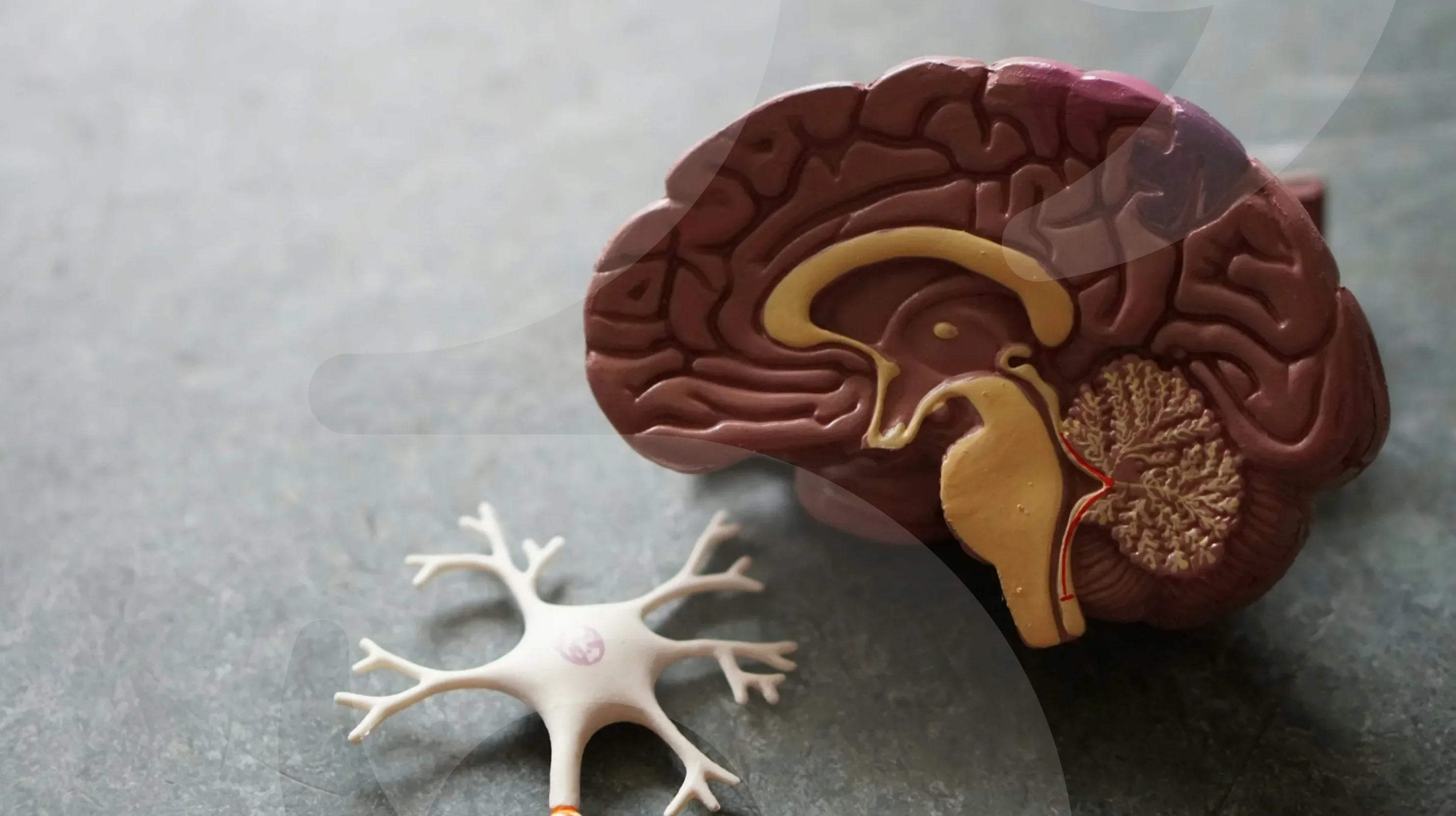
*brain regions purely illustrative
We were not designed to spend hours each day sitting in chairs, hunched over desks and screens. Yet for most of us in the modern world, that is precisely what we do. And this matters enormously for birth.
The position of your baby in the weeks and days leading up to birth is heavily influenced by your daily posture and movement patterns. Babies instinctively find the path of least resistance, and in a pelvis that has spent years being compressed in a seated position, that path may not be the optimal one for an efficient, comfortable labour.
This is one of the reasons why knowledge of biomechanics (such as the Spinning Babies techniques) is invaluable. Developed by midwife Gail Tully, Spinning Babies is a practical approach to pregnancy and birth based on biomechanics that uses balance, gravity and movement to encourage optimal foetal positioning and support easier, more efficient labours. This is not about forcing your baby into position, it’s about restoring balance to your body so that nature can do what it does best.
Simple practices like the forward-leaning inversion, side-lying release, harmonics and walking (particularly on varied terrain) can make a meaningful difference. And this is not just about positioning. Modern life also affects our nervous systems, our stress levels, our oxytocin production and our capacity to enter the deeply intuitive, undisturbed state that supports labour (think back to point one). When that physiology is disrupted, intervention such as labour augmentation or surgical birth (along with the associated risks) is often the fallback. Biomechanics and other holistic techniques give you somewhere to go before jumping straight to something more invasive.
To make your birth prep even more effective, try seeing a cranial osteopath and a women's health physio on top of any exercise classes. In my experience, they can do a great deal for optimising your biomechanics, as well as preventing and treating discomfort in pregnancy and reducing the need for more invasive intervention in labour, particularly for slow progress, pain and tearing.
Supporting your body for birth is not indulgent, and not optional if you want the best chance of a positive experience. Preparation that starts well before labour is key to a smoother birth.
Many doulas will tell their clients to expect to be pregnant for 42 weeks. There’s a good reason for this: the “due date” is one of the biggest fallacies in modern medicine.
Firstly, due dates are calculated on the presumption that every pregnancy takes the same amount of time to complete. They don't. Gestation varies naturally between healthy women, and by considerably more than the neat single date written on your notes would suggest. The due date is an average dressed up as a deadline.
Secondly, the idea that your placenta "ages" and begins to fail once you pass 40 weeks is a theory that many argue was debunked decades ago, and is far less settled than you are likely to be told. The changes usually offered in research as evidence of ageing are just as easily read as a placenta doing precisely what a placenta is supposed to do: grow and develop. Sara Wickham has written about this if you want the detail, as has Sophie Messager.
Think about it for a second. Why would a foetal organ, made of foetal cells rather than maternal ones, start expiring in a healthy pregnancy before the baby is ready to be born? Particularly when we believe it is the baby, not the mother, who initiates labour. The pathologist Harold Fox spent his career studying placentas and argued exactly this.
I am not claiming that all of this is settled science: we still don’t know with full certainty the true reasons why placental changes can occur in otherwise healthy pregnancies in healthy women with healthy lifestyles, and whether this is truly pathology or not. But it is worth noticing how confidently we are told something that has never actually been proven.
It is true that the risk of stillbirth rises as you go past your due date. I am not going to pretend otherwise. But you’re entitled to know what that risk actually is. Going from 40 to 41 weeks means roughly one additional stillbirth for every 1,449 women. At 42 weeks it sits at around 3 in 1,000. The Cochrane review that recommends induction before 42 weeks finds that 544 inductions are needed to prevent one perinatal death: “The number needed to treat for an additional beneficial outcome (NNTB) with induction of labour, in order to prevent one perinatal death, was 544 (95% CI 441 to 1042)”. Sara Wickham, whose PhD was on induction, rightly points out that the increase in risk "doesn't happen as early as some people believe, and it is also lower than women are often told".
The numbers above are real, and for some women they will be reason enough to choose induction for “post dates”. That is a completely valid decision. But notice how different they feel written down like that, compared with being told your placenta could fail and your baby is in danger, or that the risk of stillbirth more than doubles after 40 weeks. That is the difference between information and pressure, and you are owed the first one. Presenting things in relative rather than absolute risk can make a risk look bigger and sound more convincing, without anyone understanding it any better. Whether or not that is deliberate, it is how a great deal of bias gets introduced. Sara Wickham puts it more plainly: “in many situations, what women and families are told about risk is either not true, or not the full picture”.
For many, induction for post dates just isn’t worth it given the risks that come with the procedure in and of itself. This survey of UK maternity units goes further, noting that "given the low frequency of perinatal death induction is designed to avoid, it is also possible that the harm occurring during induction delays is as great as the potentially avoidable fetal deaths induction is targeted at reducing". But you can’t make an informed decision on this without full, unbiased counselling based on your specific situation.
And then there is your phone.
Your phone is not your friend in the third trimester. Those messages from friends and family asking whether the baby is here yet are the last thing that is going to help you go into labour. So many of my clients find it stressful and overwhelming, and it is not hard to see why: it is the exact opposite of the calm, unobserved, unhurried state your body actually needs (think back to point one and my analogy about needing the toilet).
More often than I can comfortably put down to coincidence, the clients who experience the due date bombardment and decide to put their phone away (and accept that their baby will come when they are ready) generally go into labour within a day or two. You can read more about how my client Jasmine experienced the same effect during her prodromal labour.
Sophie Messager's blog on this made me chuckle in knowing agreement. She makes many of the same points I find myself making to clients, all in a very accessible and raw way; it’s definitely worth a read. And if the waiting itself is the hardest part, this piece by the midwife Jana Studelska is what I send to clients who are running out of patience, and it’s a lovely one.
So think in due months, not due dates…and if friends and family insist on asking, add on a couple of weeks (and consider stepping away from your phone). My template for due date text messages has also gone down a treat with parents who want to respectfully set boundaries around the well-meaning third-trimester check-ins.
And if the stillbirth question is sitting heavily with you, this article is a really interesting read.
Now for a bit of shameless plugging because I think I’ve earnt it!
Having a doula is not an indulgence.
When people hear "doula", they often picture something reserved for wealthy wellness fanatics, or the crunchy. A lovely add-on. A nice-to-have. Someone you might hire if you have spare money after the nursery furniture and the pram, if you actually believe in that stuff.
I want to challenge that idea entirely.
In my many years of working with families, I have seen first-hand how the right support can shape not only the way you remember your birth and postpartum, but your future wellbeing (and your family’s too). The impact can be profound, and it would be a disservice to you not to say so here. This is not only my experience talking. Continuous support in labour has Cochrane reviews behind it going back more than twenty years. I have gone through some of the evidence over here, so I won't repeat myself now.
But the reason doulas matter goes beyond the statistics. You don’t need to spend a fortune on all the latest gear. A baby’s needs can be fulfilled with very little “stuff”. Your baby does not care about the pram you chose, the clothes they wear, or the colour of the nursery walls. And honestly, none of it will change your life much either. What babies care about (what their developing brain and nervous system respond to) is the emotional environment into which they are born. The safety, the calm, the feeling of being cared for and supported to emotionally regulate (and being poked and prodded by medical staff as little as possible!).
And for you, call me crazy, but a healthy baby isn’t all that matters. How you give birth leaves a lasting mark on your physical health, mental health and transition into parenthood. It shapes your relationship with your body, your confidence as a parent, how easily you bond with your baby and your capacity to maintain your relationships with everyone else.
The ripple effects of a supported birth (or a traumatic one) reach far beyond the birth room. They follow you home: through matrescence, into how you parent on the hardest days, into the stories you tell your friends over coffee and the ones you will eventually tell your child. And our children absorb those stories twice over - once when we tell them out loud, and again in the thousand small ways we live them out. They grow up holding their own ideas about birth, about women's bodies, about what is normal to expect and to accept. In time, those ideas become the culture the next generation is born into. There is even a growing body of research exploring how these effects may echo epigenetically across generations (it's from 2013, but it's the paper that set the framework and it's authored by Hannah Dahlen and Soo Downe, two leading voices in physiological birth research, so it's a good place to start).
And to any parents reading this who feel guilty because their experience didn’t match the “ideal”, I would never want to undermine the comfort anyone has offered you. But I’d hate to diminish your experience by saying a healthy baby is all that matters when you are just as important, and so is everyone’s emotional health. Writing generally about something this complex and emotionally charged without risking hurting someone is impossible, and is one of the many reasons I currently shy away from social media and prefer live, responsive conversation.
As you’ll hear me say many times, my job is to hold space for you physically and emotionally. I’m not there to judge you or tell you what you should do. I’m not able to replace your midwife or your doctor. But I am here to do what no clinical professional (however brilliant and dedicated) is truly able to do in today's NHS:
Stay. Continuously, undivided and just for you whenever, wherever and however you need it. Share the entirety of this very raw human experience with you. Celebrate you in your joy, comfort you in your grief, and maybe throw in some wisdom for good measure.
You may be like me and love aesthetics and become obsessed with the latest baby-fads, but years down the line what will matter to you most is how healthy and supported you felt during that time (trust me, I really have been there, and so has former client Natasha who once believed doulas were a “service for the pampered”).
Babies don't need much stuff. But they do need parents who feel safe, seen and supported. And you need to feel this too.
If any of these things have resonated with you, I would love to hear from you. Whether you are just starting out in pregnancy, deep in your preparations, or already navigating the postnatal haze: I am here for you.
And if money is the thing standing between you and support, please reach out anyway. I run an access fund, there are community doula schemes across the country such as Doulas Without Borders and Birth Companions, and those conversations cost you nothing but time. I would far rather you reach out for signposting than have you quietly assume the door is shut when you need support.
Written By
 Doula and Founder of Birth Beautiful
We use cookies to ensure our website works properly, remember your preferences, tailor on-site messages and understand how the website is used. Essential cookies are always active. You can choose to accept or reject non-essential cookies, or . Read our Cookie Policy for more details.